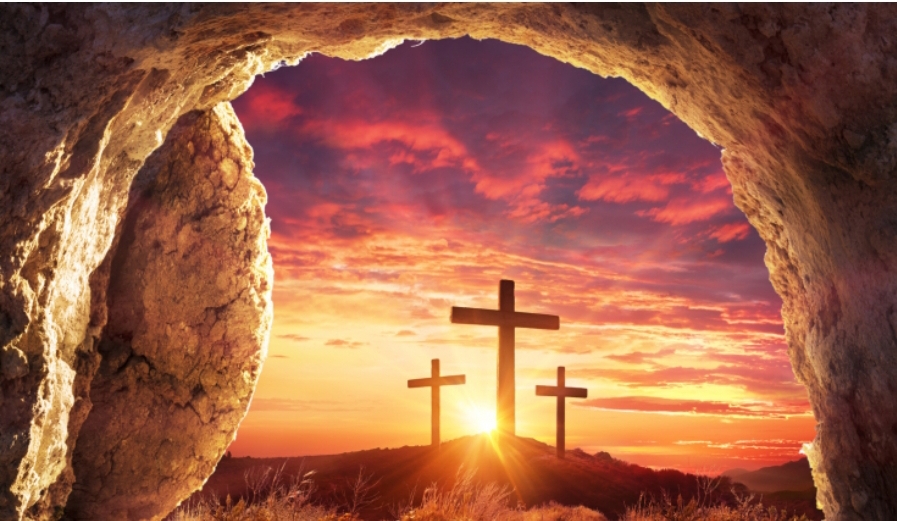
The death and resurrection of Jesus Christ is a central belief of Christianity. Christians hold that Jesus died for their sins and was resurrected on the third day, thus paving the way for eternal life for believers. However, atheists do not share this belief. In this article, we will explore the reasons why atheists do not believe in the death and resurrection of Jesus Christ, and why Christians do.
To start, it is important to note that atheism is a lack of belief in gods or supernatural beings. This means that atheists do not accept the existence of a divine being, including Jesus Christ. For atheists, the idea of a God who created the universe, controls it, and intervenes in human affairs is a mere myth, and as such, the death and resurrection of Jesus Christ holds no significance for them.
Furthermore, atheists reject the notion of an afterlife, which is a key component of Christian belief. Christians believe that the resurrection of Jesus Christ was a sign of eternal life, and that those who believe in him will also be resurrected and have eternal life. Atheists, however, do not believe in an afterlife and thus see the resurrection of Jesus as a fictional story, rather than a historical event.
Additionally, atheists tend to be skeptical of supernatural events and miraculous claims. The idea that a man could rise from the dead is seen as implausible, as it defies the laws of physics and goes against our understanding of biology. As such, atheists are more likely to see the resurrection of Jesus as a legend or myth rather than a factual event.
Moreover, many atheists argue that the story of the death and resurrection of Jesus Christ has been embellished and distorted over time. The New Testament, which is the primary source of information about Jesus, was written decades after his death by people who did not personally witness the events they were describing. Furthermore, the texts were written in a different cultural and historical context, which makes it difficult to interpret them accurately.
Some atheists also point out that there are discrepancies in the various accounts of the death and resurrection of Jesus in the New Testament. For example, the four gospels provide different details about the timing and sequence of events, and some events are only mentioned in one gospel. This leads some atheists to question the accuracy of the accounts and to view them as unreliable.
On the other hand, Christians believe in the death and resurrection of Jesus Christ as a historical event and a cornerstone of their faith. For Christians, the resurrection of Jesus is a central doctrine that confirms his divinity and the truth of his teachings. They believe that Jesus died for the sins of humanity, and that his resurrection provides hope for eternal life.
Christians base their belief in the resurrection of Jesus on several pieces of evidence. Firstly, the empty tomb of Jesus is seen as evidence of his resurrection. According to the New Testament, after Jesus was crucified, his body was placed in a tomb. Three days later, the tomb was found empty, and Jesus appeared to his disciples. Christians believe that the empty tomb is proof that Jesus was resurrected and that his physical body had been transformed into a glorified body.
Secondly, Christians point to the eyewitness accounts of the resurrection. According to the New Testament, Jesus appeared to his disciples and many other people after his death, including the apostle Paul. These eyewitness accounts are seen as reliable evidence of the resurrection.
Thirdly, Christians argue that the resurrection of Jesus is a unique event that cannot be explained by natural causes. They see it as a miracle that is beyond human understanding, and as evidence of the divine nature of Jesus.
Lastly, Christians believe that the resurrection of Jesus is supported by the transformed lives of his followers. According to the New Testament, the disciples of Jesus were transformed from fearful and dispirited individuals to bold and courageous advocates of his message after witnessing his resurrection. This is seen as further proof of the transformative power of Jesus and the truth of his teachings. In conclusion, the reasons why atheists do not believe in the death and resurrection of Jesus Christ are rooted in their lack of belief in a divine being, their skepticism of supernatural events, and their doubts about the reliability of the accounts of Jesus in the New Testament.
Christians, on the other hand, believe in the resurrection of Jesus based on their faith, eyewitness accounts, and evidence of a transformed life in Jesus’ followers.
References:
• Baggini, J. (2003). Atheism: A Very Short Introduction. Oxford University Press.
• Dawkins, R. (2006). The God Delusion. Houghton Mifflin.
• McGrath, A. (2006). Christianity: An Introduction. Wiley-Blackwell.
• Metzger, B. M., & Coogan, M. D. (1993). The Oxford Companion to the Bible. Oxford University Press.
Links:
• “Atheism” (Stanford Encyclopedia of Philosophy): https://plato.stanford.edu/entries/atheism-agnosticism/
• “The New Testament” (BibleGateway.com): https://www.biblegateway.com/passage/?search=Matthew+1&version=NIV
• “Evidence for the Resurrection of Jesus” (GotQuestions.org): https://www.gotquestions.org/evidence-resurrection.html
• “The Resurrection of Jesus: A New Historiographical Approach” (Gary Habermas): https://digitalcommons.liberty.edu/cgi/viewcontent.cgi?referer=&httpsredir=1&article=1129&context=lts_fac_pubs
Tags: #atheism #Christianity #resurrection #JesusChrist #NewTestament #eyewitness #miracle #transformedlife #divinity #faith #afterlife #skepticism #myth #legend #reliability #accuracy #historical #evidence #emptytomb #apostlePaul #transformation #hope


 Temple Ministries
Leave a reply to Ministry of the Lord. Cancel reply